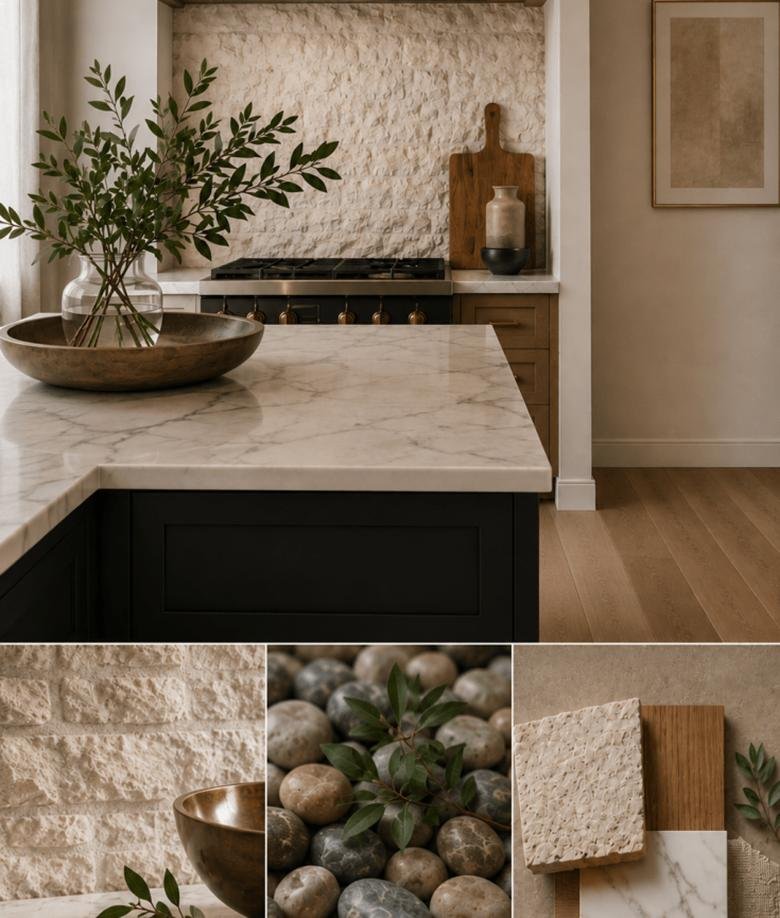
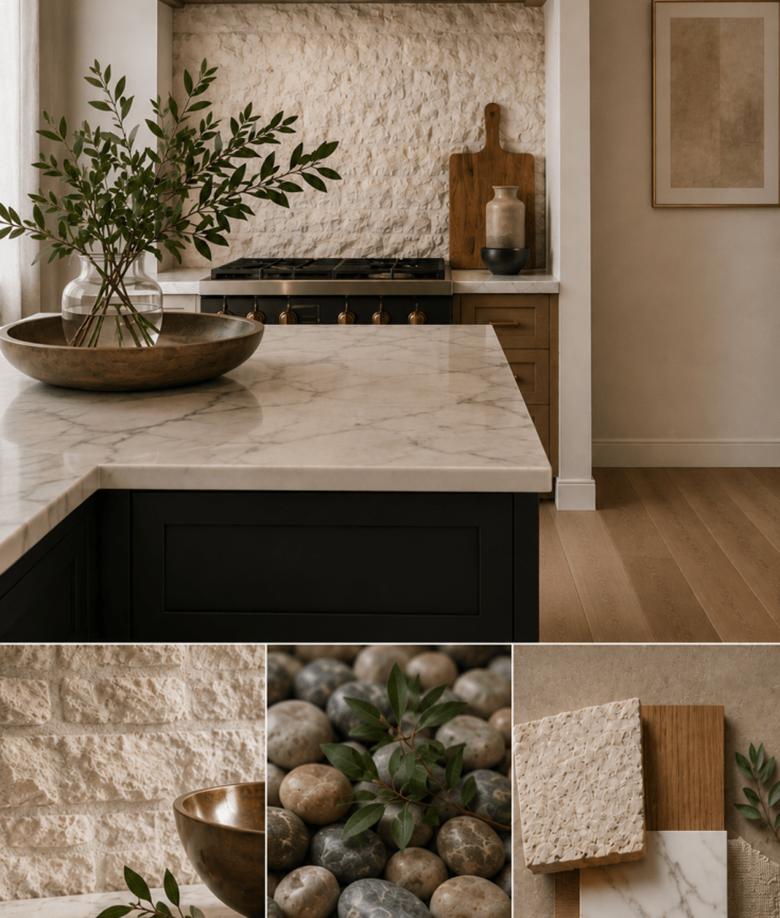
Designing with Texture: Creating Depth, Contrast, and Impact
Early conversations with clients typically revolve around questions about layout and color. This makes sense because layout impacts functionality, and color sets the tone for the space. But if the goal is to give clients a space that provides an immersive experience, texture must be part of the conversation. Incorporating both tactile (touch) and visual (sight) texture into designs brings interest and depth that is the secret to creating the ‘WOW’ factor for any space. Check out our tips for using texture combinations to elevate your next project.
OPPOSITES ATTRACT
Combining different textures creates visual interest as light reflects and absorbs on different surfaces.
One of the key features of great design is the intentional use of opposites in a space. Selecting different colors for upper and lower cabinets or choosing an accent color for an island adds depth to a kitchen. Contrasting textures for countertops and backsplash combinations, like pairing sleek, polished marble countertops with a rough, chiseled stone backsplash, impact the way light moves in the space. The marble reflects light and feels clean and open while the raw backsplash catches shadow and adds visual weight. Side by side, each one makes the other look better.
NATURAL WONDERS
River rock stones and large format tiles create contrast in this luxurious shower.
The desire to transform a functional bath space into a spa-like retreat has expanded from a niche luxury request to a standard ask for homeowners at every budget level. Layering textures is an expert way to create a spa-like feel in the bath. River-rock stones underfoot in the shower, paired with large, earth-tone tiles on the walls, create a calm, nature-inspired space. The pebble floor turns a shower into a multi-sensory moment, not just something nice to look at. You can carry those river-rock elements into the vanity area too, as a decorative accent.
THE UNIFYING ELEMENT
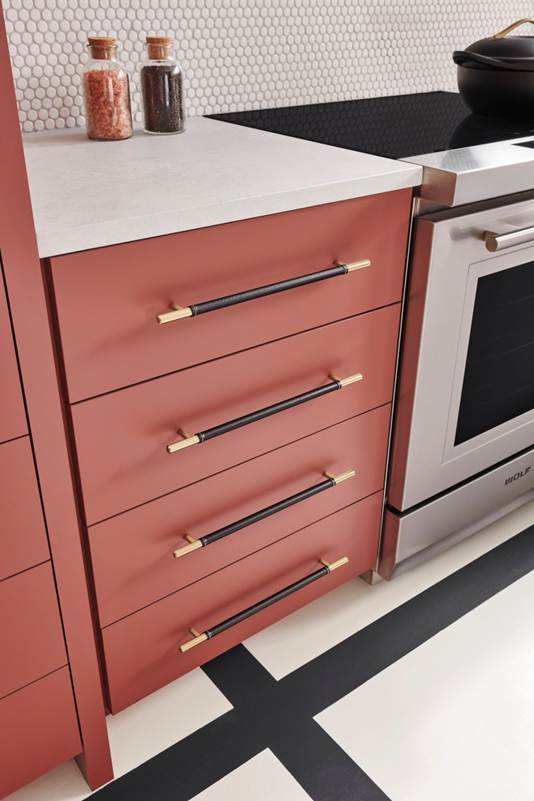
A well balanced pull with faux leather accent makes it look and feel luxurious.
Decorative cabinet hardware can play an important role in tying together different elements in a space. It is especially important because of the visual and tactile experience decorative hardware provides. You can see a finish from across the room, and up close you feel the form in your hand. Thoughtful selection of shape, style, size, and color can create the finishing touch that distinguishes a decorated space from a designed space.
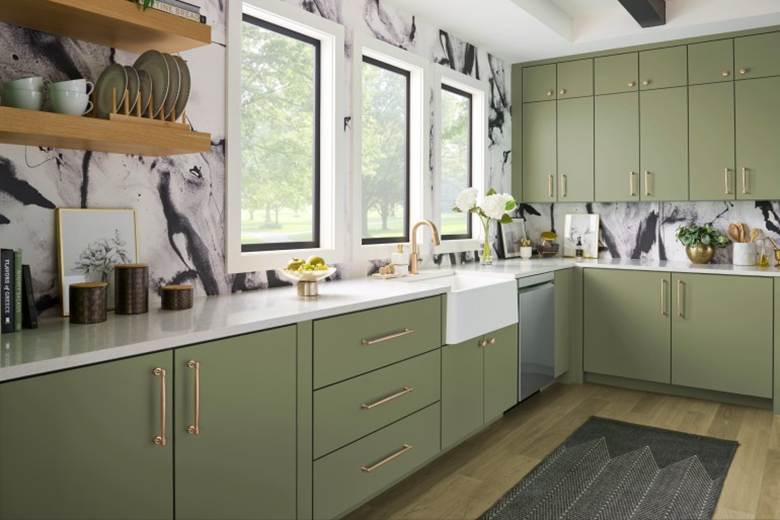
This dynamic mixed metal kitchen with pulls of varying lengths combined with coordinated cabinet knobs.
In the case of kitchens and baths, designers may choose to coordinate the decorative hardware finish with the plumbing or light fixtures. But that is not the only consideration when bringing visual texture to a space. Choosing between different knobs sizes and pull lengths impacts how the eye takes in the room. A designer might choose a longer pulls on oversized drawers paired with coordinating knobs on cabinet doors. These choices must be considered in the context of textures already in play. The goal is to strike the right balance and avoid having elements compete for attention.
FEELS AS GOOD AS IT LOOKS
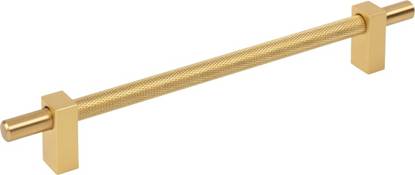
The Larkin collection from Jeffrey Alexander features knurled detailing that provides a visual and tactile experience.
The importance of tactile experience of decorative hardware cannot be overstated. The feel of knurled hardware, with its cross-hatched, grip-pattern surface, has an almost precise, mechanical quality. Paired with a smooth marble countertop or a lacquered cabinet face, that contrast is immediately satisfying. Architectural elements like reeded and fluted hardware bring a different kind of tactile interest. The parallel ridges feel deliberate, like a column detail translated into a cabinet pull. They also catch light in a directional way that adds visual dimension to a flat cabinet door. Although it is often one of the last design decisions made, the choice of decorative hardware can have an outsized impact on how a customer feels about a project. It is a design choice they will interact with visually and tactilely every day, so it’s worth designing with the same intention as cabinetry, countertops, flooring, and color.
BALANCING ACT
The crisp, rectangular profile of the White Oak Shaker Cabinets adds depth without distracting from the natural wood grain cabinetry.
While texture adds depth and interest to space, it’s important to remember that too much texture can be, well, too much! Not all textural pairings are equally successful. A few principles worth keeping in mind:
- Let one texture lead. Rough stone on a feature wall, a pebble floor, and a textured shower tile all at once reads as visual noise, not visual interest. Hierarchy matters, so pick a star and let the rest support it.
- Bridge casual and formal. Natural fibers and high-polish surfaces can feel like they belong in different rooms, one organic, one refined. The pairing can work, but it needs strong color or material continuity to connect the two.
- Create balance. When the cabinet surface is already heavily textured (wire-brushed oak, rough-sawn veneer), textured hardware can create friction instead of conversation. A simpler pull in a considered finish lets the wood do the talking.
Texture creates engagement in spaces. In kitchen and bath spaces, where families begin and end their days, a designer’s keen eye to combining textures makes these intimate spaces feel inviting and relaxing. Do you have a favorite texture pairing? Share it with us in the comment section below.